
You’ve got a great product. Your service is solid. Clients who work with you love you. But somehow, people aren’t taking you seriously before they even speak to you. Your proposals get ignored. Your social posts don’t get saved. Your website doesn’t convert.
Here’s the brutal truth: your business might look cheap and a missing or broken business brand kit is probably why.
Branding isn’t just about looking pretty. It’s about the first impression you make before you say a single word. And in today’s digital-first world, that impression happens in less than 7 seconds.
This article breaks down exactly why a proper brand identity kit is non-negotiable, what one actually contains, how to build it right, and what happens to businesses that skip it.
Key Takeaways
- A business brand kit is the visual and tonal foundation of your entire brand without it, you look inconsistent and untrustworthy
- Inconsistent branding can cost you real money; studies show consistent branding increases revenue by up to 23%
- A brand identity kit typically includes your logo, color palette, typography, brand voice, and usage guidelines
- Cheap-looking brands repel premium clients before a single conversation happens
- You don’t need a massive budget to build a professional brand kit you need the right strategy
- Hexalevel offers done-for-you logo and brand kit services that make your business look world-class from day one
What Exactly Is a Business Brand Kit (And Why Does It Matter)?
A business brand kit sometimes called a brand style guide or brand identity kit is a collection of all the core visual and tonal elements that define how your brand looks, speaks, and feels everywhere it shows up.
Think of it as the DNA of your business’s identity. It ensures that whether someone sees your Instagram post, your invoice, your website header, or your business card, they recognize it as you instantly.
Without it, your brand is essentially improvising. And improvised branding looks exactly like what it is: unplanned, amateur, and cheap.
Here’s a simple analogy. Imagine walking into a high-end restaurant where the staff wore different uniforms, the menu font changed every page, and the décor was a random mix of vintage farmhouse and neon diner. Would you trust the food? Probably not. Your brand works the same way.
The Real Reasons Your Business Looks Cheap Right Now
You’re Using Inconsistent Colors Everywhere
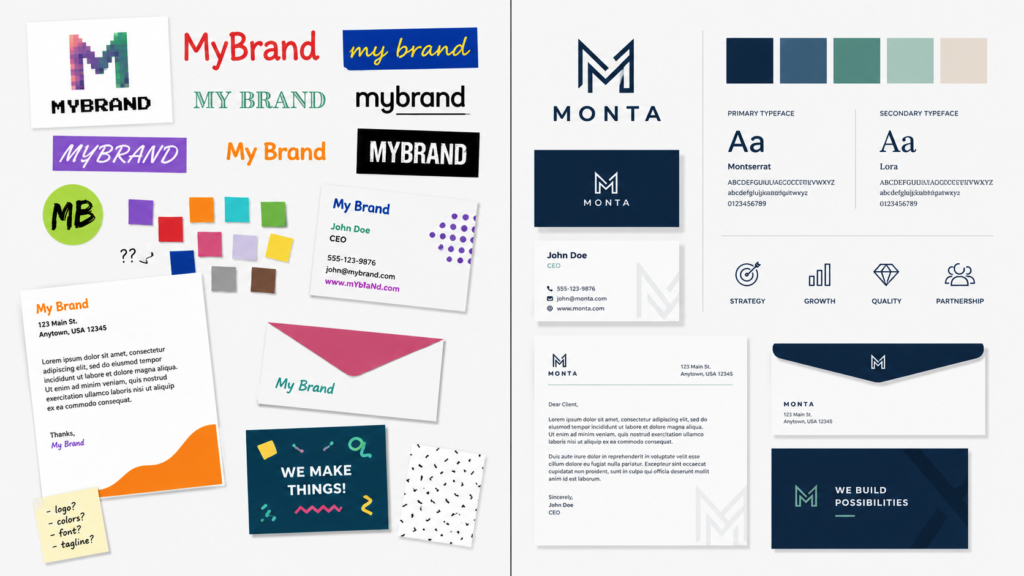
Your website is navy blue. Your Instagram is teal. Your business cards are sky blue. They’re all “blue” but they’re not your blue. This kind of color inconsistency immediately signals to potential clients that nobody is in charge of the brand experience.
Research from Lucidpress found that consistent brand presentation across platforms can increase revenue by up to 23%. Inconsistency does the opposite it erodes trust before a conversation even starts.
Your Logo Looks Different on Every Platform
A pixelated logo on your email signature. A stretched version on your Facebook cover. A cropped version on your invoice. Sound familiar?
This happens when businesses don’t have proper logo file formats prepared for different use cases. A proper brand identity kit always includes multiple logo variations full color, reversed, icon-only, horizontal, stacked so you always have the right version for every context.
Your Fonts Are All Over the Place
Times New Roman in your proposals. Comic Sans in your social posts (please, no). A random Google Font your web developer picked because it “looked nice.” Inconsistent typography is one of the fastest ways to look unpolished and unprofessional.
Typography communicates personality. A luxury brand uses elegant serif fonts. A tech startup might use a clean geometric sans-serif. A creative agency might go bold and editorial. But whatever it is it needs to be consistent.
Your “Brand Voice” Doesn’t Exist
Branding isn’t only visual. The way you write captions, emails, and proposals is also part of your brand. If your Instagram sounds casual and fun but your emails sound stiff and corporate, clients feel a disconnect. That disconnect creates doubt.
You Have No Brand Guidelines Document
This is the root cause of all the above. Without a documented guide telling you (and your team, your designer, your VA) exactly how to use your brand elements, every piece of content becomes a guessing game.
What a Proper Brand Identity Kit Actually Includes
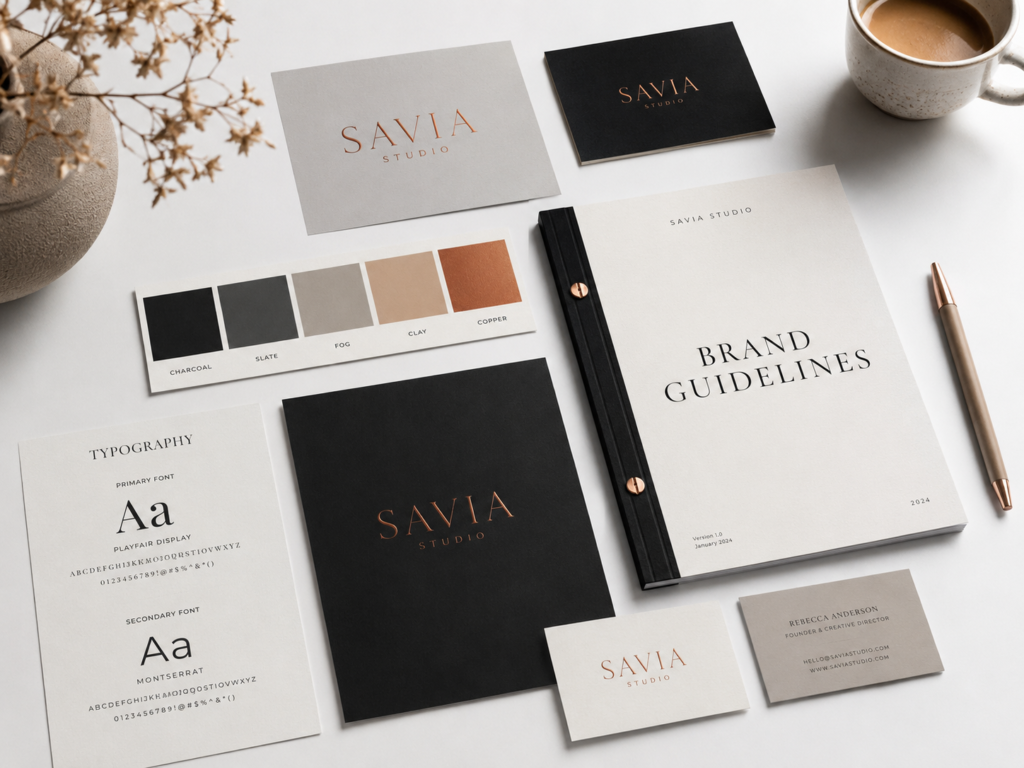
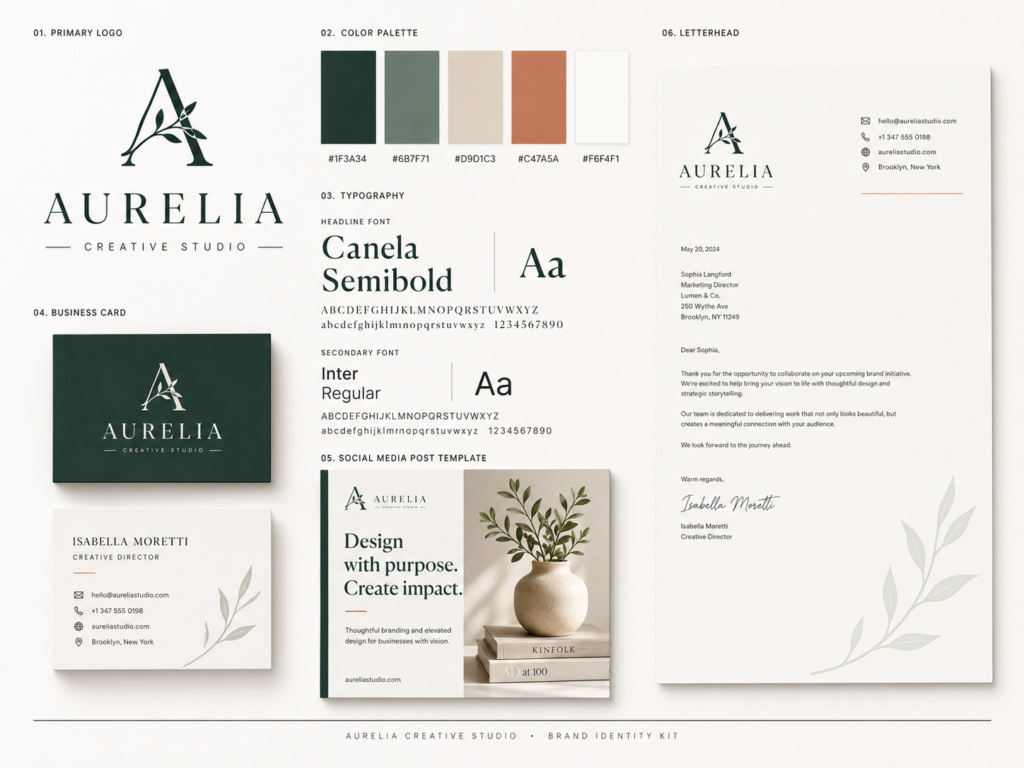
A professional brand identity kit isn’t just a logo file. Here’s what a complete, done-right brand kit looks like:
1. Primary Logo and Variations
Your main logo in multiple formats:
- Full-color version
- Black and white version
- Reversed (white on dark background)
- Icon or monogram mark only
- Horizontal and stacked layouts
All delivered in PNG, SVG, PDF, and EPS formats so you’re ready for print and digital.
2. Brand Color Palette
A defined set of colors with exact codes HEX (for web), RGB (for screen), CMYK (for print), and Pantone (for physical products). Usually this includes:
- 1–2 primary brand colors
- 2–3 secondary or accent colors
- Neutral tones (white, black, gray variations)
3. Typography System
Your brand fonts clearly defined, including:
- Heading font (for titles and hero text)
- Body font (for paragraphs and captions)
- Accent font (optional, for callouts or pull quotes)
- Font weights, sizes, and line spacing rules
4. Brand Voice and Tone Guide
How does your brand speak? Words you use. Words you avoid. Personality traits (bold, warm, witty, authoritative). Example phrases for different contexts social media, emails, website copy.
5. Brand Usage Guidelines
Rules for how to use (and not use) your brand elements:
- Minimum logo size requirements
- Clear space rules around the logo
- What backgrounds work and which to avoid
- What NOT to do (stretch, recolor, add effects, etc.)
6. Social Media Templates
Pre-sized, on-brand templates for Instagram posts, Stories, LinkedIn banners, Facebook covers so your team never improvises your visuals again.
7. Business Collateral Templates
Letterhead, email signature, proposal template, invoice design all branded consistently.
Let’s Build Something Powerful Together
How a Cheap-Looking Brand Is Actively Costing You Money
Let’s talk numbers and real scenarios.
Premium Clients Judge You Before Contacting You
High-value clients the ones who pay well, respect your time, and refer others are making decisions based on your brand’s visual presentation before they read a single word of your copy.
A 2023 Stanford study found that 75% of users judge a company’s credibility based on its website design. If your brand looks inconsistent or unprofessional, those premium clients bounce and go to a competitor who looks the part.
You’re Charging Less Than You Should
Here’s something nobody talks about: your branding affects the price you can charge. If your brand looks cheap, clients unconsciously expect cheap prices. A professional, cohesive brand identity signals that you are a premium provider and premium providers command premium fees.
Think about two freelancers. Same skill level. Same portfolio quality. One has a polished website, consistent brand colors, a professional logo, and a beautiful proposal template. The other sends a PDF in Arial font with their Canva logo that they made in 20 minutes. Who gets hired at the higher rate? Every time.
Your Marketing Doesn’t Work as Hard
When every piece of content looks different, none of it builds brand recognition. Brand recognition is cumulative the more consistently someone sees your brand, the more familiar and trustworthy you become. Without a proper business brand kit, you’re essentially starting from zero every time someone encounters your content.
Your Team Produces Off-Brand Content
Once you have a team even just a VA or social media manager without a brand kit, they’re guessing. And their guesses add up to a brand that looks fractured and inconsistent across every touchpoint.
How a Cheap-Looking Brand Is Actively Costing You Money
A professional brand identity kit isn’t just a logo file. Here’s what a complete, done-right brand kit looks like:
1. Primary Logo and Variations
Your main logo in multiple formats:
- Full-color version
- Black and white version
- Reversed (white on dark background)
- Icon or monogram mark only
- Horizontal and stacked layouts
All delivered in PNG, SVG, PDF, and EPS formats so you’re ready for print and digital.
2. Brand Color Palette
A defined set of colors with exact codes HEX (for web), RGB (for screen), CMYK (for print), and Pantone (for physical products). Usually this includes:
- 1–2 primary brand colors
- 2–3 secondary or accent colors
- Neutral tones (white, black, gray variations)
3. Typography System
Your brand fonts clearly defined, including:
- Heading font (for titles and hero text)
- Body font (for paragraphs and captions)
- Accent font (optional, for callouts or pull quotes)
- Font weights, sizes, and line spacing rules
4. Brand Voice and Tone Guide
How does your brand speak? Words you use. Words you avoid. Personality traits (bold, warm, witty, authoritative). Example phrases for different contexts social media, emails, website copy.
5. Brand Usage Guidelines
Rules for how to use (and not use) your brand elements:
- Minimum logo size requirements
- Clear space rules around the logo
- What backgrounds work and which to avoid
- What NOT to do (stretch, recolor, add effects, etc.)
6. Social Media Templates
Pre-sized, on-brand templates for Instagram posts, Stories, LinkedIn banners, Facebook covers so your team never improvises your visuals again.
7. Business Collateral Templates
Letterhead, email signature, proposal template, invoice design all branded consistently.
Step-by-Step: How to Build Your Business Brand Kit
Here’s a practical roadmap for building or upgrading your brand identity kit:
Step 1 — Define Your Brand Foundation
Before any design work begins, answer these questions:
- Who is your ideal client? (Age, industry, pain points, desires)
- What 3 adjectives describe your brand personality?
- What brands do you admire visually, and why?
- What’s your brand’s core promise?
These answers will guide every visual decision.
Step 2 — Choose Your Color Palette
Start with one primary brand color that reflects your brand personality. Then build around it:
- A complementary secondary color
- An accent/call-to-action color
- Neutrals for backgrounds and text
Tools like Coolors.co or Adobe Color can help generate harmonious palettes.
Step 3 — Select Your Typography
Choose 2 fonts maximum (3 if you want an accent font). Make sure they’re:
- Available in the formats you need (web, print)
- Readable at small sizes
- Distinctive enough to reflect your brand personality
- Licensed for commercial use
Step 4 — Design Your Logo Suite
This is where you really want professional help. Your logo needs to work at all sizes, on all backgrounds, in color and without color. A proper designer will deliver all the variations and file formats you need.
➡️ See Hexalevel’s brand kit and logo design service here
Step 5 — Document Everything in a Brand Guidelines PDF
Create a single document that captures all of the above color codes, font names, logo usage rules, voice guidelines. This becomes the source of truth for every person who touches your brand.
Step 6 — Create Templates for Recurring Content
Build out social media templates, email signature, proposal design, and business card before you need them. Having them ready means your brand stays consistent under deadline pressure.
Step 7 — Audit and Update Existing Materials
Go through your existing touchpoints website, social profiles, email, PDF documents and update them to match your new brand kit. Consistency only works when it’s everywhere.
Let’s Build Something Powerful Together
Real-World Examples Brand Kits That Changed Everything
The Fitness Coach Who 3x’d Her Rates
A personal trainer came to Hexalevel with a Canva logo she’d made herself, inconsistent Instagram colors, and no proposal template. After building out her complete brand identity kit a professional logo suite, defined color palette, branded social templates, and a polished client proposal she relaunched her packages at 3x her previous prices. Her exact words: “I finally feel like I look as good as my results.”
The Real Estate Agency That Won the Listing
A boutique real estate firm was consistently losing listings to bigger agencies despite offering better service. After developing a complete business brand kit including branded presentation folders, proposal templates, and a cohesive digital presence they won their next three listing pitches in a row. Professional presentation communicates professional capability.
The Tech Startup That Finally Got Investor Meetings
A SaaS startup had a great product but kept getting dismissed at the pitch deck stage. Once they invested in a brand identity kit that gave them a polished visual language across their pitch deck, website, and investor emails, meeting requests started coming in. Investors fund brands they believe in and brands they believe in look the part.
Internal Resources Worth Exploring
Before you dive into building your brand kit, it also helps to see the full picture of how branding connects to your broader digital presence. Check out these related Hexalevel resources:
- Why a Brand Kit Matters for Business Success — a deep dive into the business case for professional branding
- Social Media Creatives Service — on-brand content that keeps your visual identity consistent across platforms
- Website & Funnel Graphics — branded visuals that make your website and funnels convert
- Ad Creatives for Meta & TikTok — visually consistent paid ad content that builds brand recognition while driving sales
Let’s Build Something Powerful Together
Frequently Asked Questions
What is a business brand kit and what does it include?
Why do I need a brand kit if I'm just a small business?
Small businesses actually need brand kits more than large corporations because large corporations have entire marketing teams managing consistency. As a small business owner, you’re likely wearing many hats, and so is anyone you hire to help you. Without a brand kit, every person who touches your brand will make different decisions, resulting in a fractured, inconsistent visual identity. A brand kit gives even a one-person business the ability to look polished and professional at every touchpoint.
How is a brand kit different from just having a logo?
A logo is one element. A brand kit is the entire system. Your logo alone can’t tell your VA what color to use on your Instagram posts, which font to use on your proposals, or how formal vs. casual your captions should sound. A brand identity kit gives you and your team the full picture every visual and tonal rule that makes your brand recognizable and consistent.
How much does a professional brand kit cost?
Can I build a brand kit myself using Canva?
You can create basic brand elements in Canva colors, fonts, and simple templates. But there are limitations: Canva logos aren’t truly scalable (no SVG/vector output on free plans), the designs often look templated rather than custom, and without a design background, it’s easy to make choices that look inconsistent or amateurish. A Canva brand kit can work as a temporary starting point, but for a business that wants to attract premium clients, a professionally designed brand identity kit is a worthwhile investment.
How long does it take to build a brand kit?
Conclusion
Here’s the bottom line: your brand is always making an impression the question is whether that impression is working for you or against you.
A missing or broken brand identity kit is one of the most common reasons businesses struggle to attract premium clients, command higher prices, and build real brand recognition. It’s not a design luxury. It’s a foundational business asset.
The good news? You don’t need a massive budget or a Fortune 500 marketing department. You need a clear strategy, the right visual elements, a documented set of guidelines, and the consistency to use them everywhere.
Whether you’re building your brand kit from scratch or finally upgrading that Canva logo you’ve been using for two years the best time to do it was yesterday. The second best time is right now.
Your business is too good to look cheap. It’s time your brand reflected that.
👉 Get your professional business brand kit from Hexalevel and start showing up like the brand you know you are.