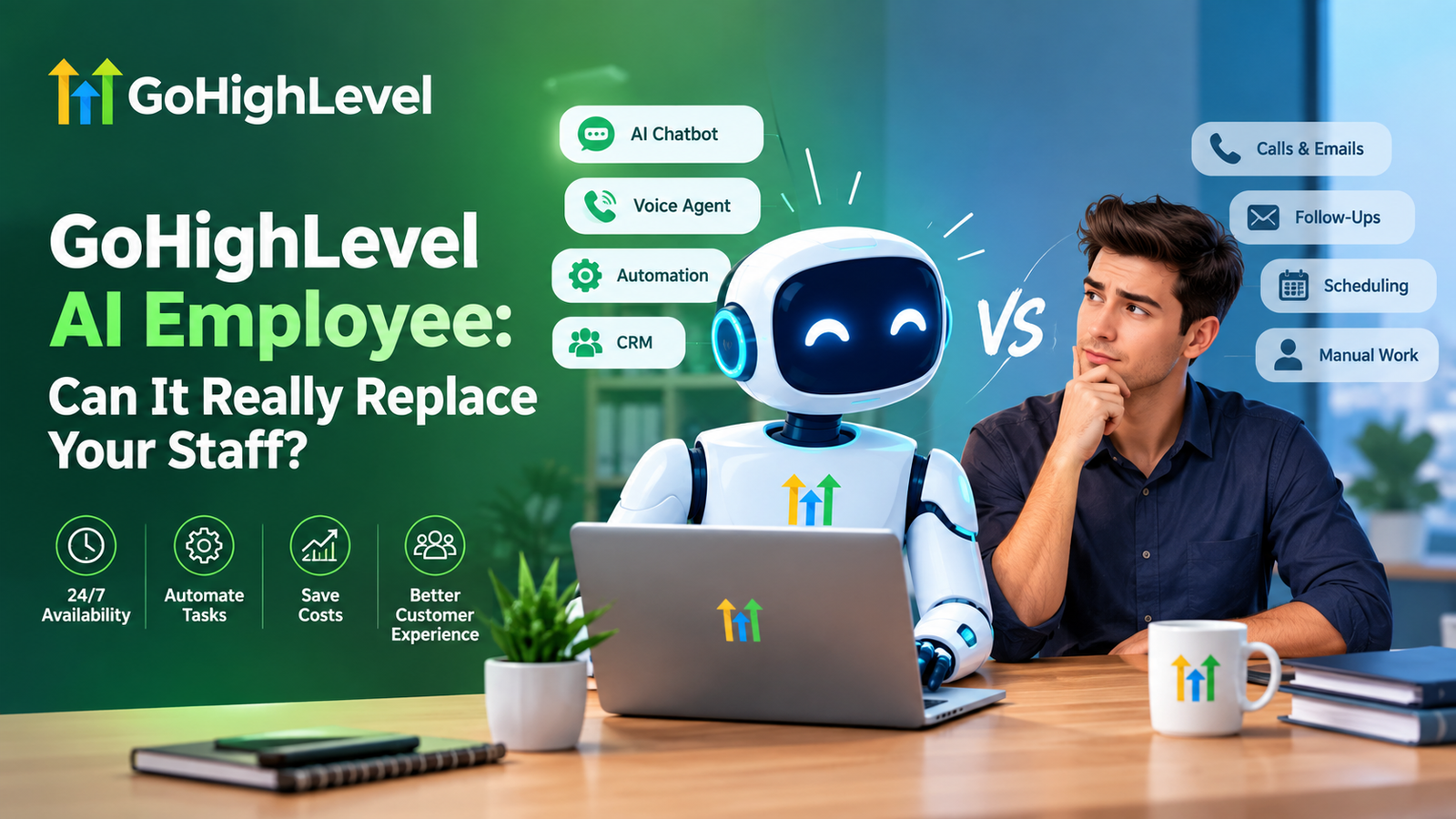
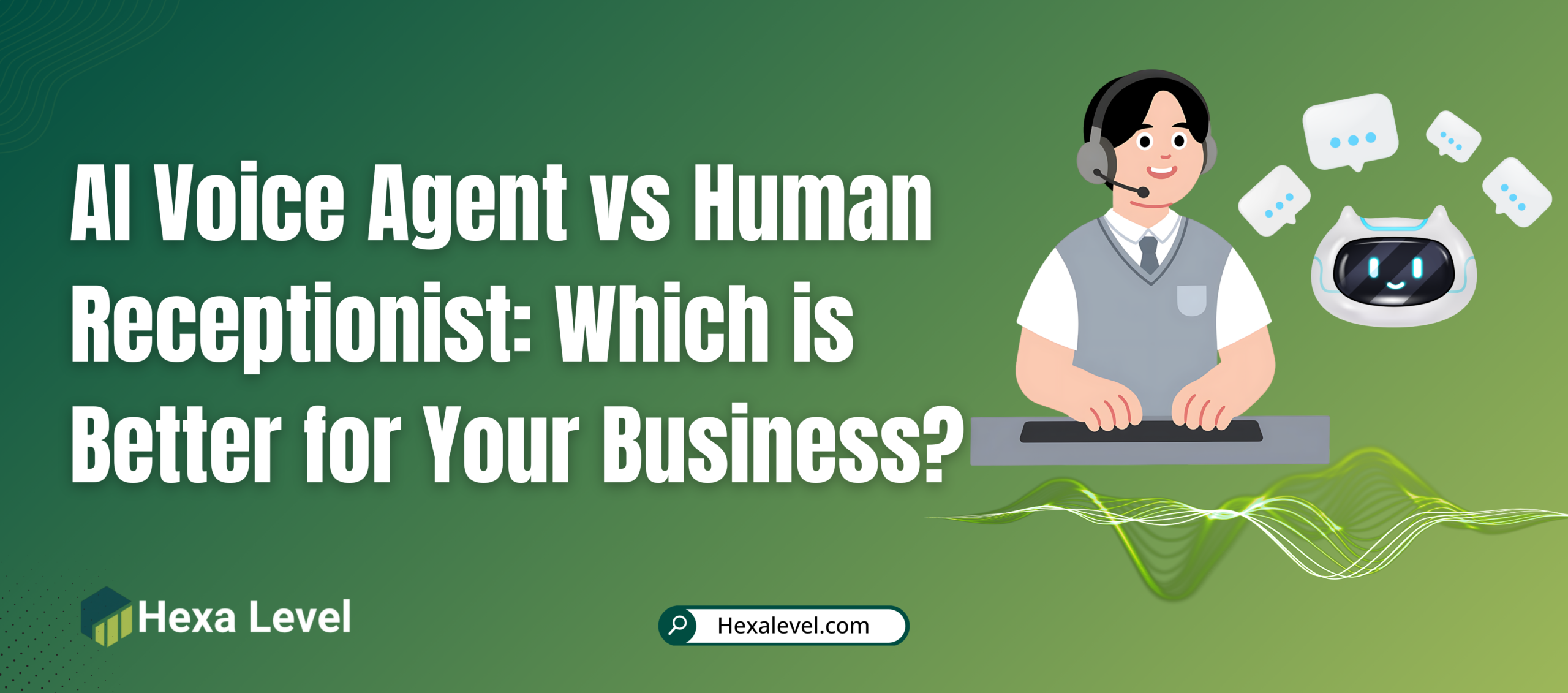
Your phone rings at 2:47 AM. Who answers?
For most small businesses, the honest answer is: nobody. And that silence is costing you more than you think. The way you handle inbound calls directly shapes your revenue, your reputation, and your growth and in 2026, businesses finally have a real choice to make. Do you invest in a human receptionist, or do you deploy an AI call answering system that works around the clock without breaks, sick days, or salary?
This article breaks down both options honestly covering cost, quality, availability, and everything in between so you can make the right call for your business.
Key Takeaways
- AI voice agents answer calls 24/7 with zero downtime or overtime costs
- Human receptionists outperform AI in emotionally complex or sensitive conversations
- The average ai receptionist cost is 70–90% less than hiring a full-time human employee
- Most small-to-medium businesses can confidently use a virtual receptionist for routine calls
- AI phone answering systems integrate with CRMs, calendars, and pipelines automatically
- A hybrid model AI for routine calls, human for high-touch situations is often the smartest approach
- Tools like Hexalevel’s AI Voice Agent make deployment fast and affordable
The Real Cost of Missing a Call
Let’s start with a number that should get your attention.
According to research by Invoca, 78% of customers buy from the first business that responds to their inquiry. If your phone goes to voicemail, that customer is already calling your competitor before the beep finishes.
A missed call isn’t just a missed conversation it’s a missed sale. For a business averaging just five missed calls per day at a $200 average deal value, that’s potentially $365,000 in revenue walking out the door every year simply because nobody picked up.
In our experience working with service businesses at Hexalevel, this pattern shows up constantly. One home services client we worked with discovered that nearly 30% of their inbound inquiries were coming in after business hours calls that were all going straight to voicemail, unheard and unanswered. Once they deployed an AI phone answering service, that entire window of lost leads became captured opportunities overnight.
This is the reality that makes the ai voice agent vs human receptionist question so urgent for business owners today.
What Is an AI Voice Agent?
An AI voice agent is a software-powered system that answers phone calls, understands natural language, responds conversationally, and takes real action all without a human on the other end of the line.
Modern automated phone assistants can:
- Answer calls instantly, any time of day or night
- Collect caller information and qualify leads
- Book appointments directly into your calendar
- Answer FAQs about your business, pricing, and services
- Route urgent calls to a human team member when needed
- Send follow-up texts or emails automatically after every call
Services like Hexalevel’s AI Voice Agent integrate seamlessly with your CRM, pipelines, and calendar systems so every call becomes a trackable, actionable business event.
What Does a Human Receptionist Do?
A human receptionist is a trained employee who manages your front desk or phone lines. They bring warmth, real empathy, and the contextual judgment that software still struggles to replicate.
Human receptionists genuinely excel at:
- Building authentic rapport with callers
- Handling emotionally sensitive or high-stakes conversations
- Making real-time judgment calls outside any scripted scenario
- Representing your brand personality in a deeply personal way
The downside is real, though. They cost significant money. They get sick. They take vacations. They can only handle one call at a time. And they are simply not available at 11 PM on a Tuesday when your next best client calls.
AI Receptionist Cost vs Human Receptionist The Real Numbers
This is where the conversation gets serious. Let’s put actual figures on the table.
Human Receptionist Annual Cost
| Expense | Estimated Annual Cost |
|---|---|
| Base salary (US average) | $32,000 – $45,000 |
| Payroll taxes and benefits | $8,000 – $12,000 |
| Paid time off and sick days | $2,500 – $4,000 |
| Training and onboarding | $1,500 – $3,000 |
| Total | $44,000 – $64,000/year |
AI Voice Agent Annual Cost
| Expense | Estimated Annual Cost |
|---|---|
| AI voice platform subscription | $1,200 – $6,000 |
| Setup and integration (one-time) | $500 – $2,000 |
| Maintenance and updates | $0 – $1,200 |
| Total | $1,700 – $9,200/year |
The ai receptionist cost gap is staggering savings of $35,000 to $55,000 per year without losing a single call. For a small business, that difference can fund an entire marketing campaign, a new hire in another role, or simply a much healthier profit margin.
Full Head-to-Head Comparison Table
| Feature | AI Voice Agent | Human Receptionist |
|---|---|---|
| Availability | 24/7, 365 days | Business hours only |
| Cost per year | $1,700 – $9,200 | $44,000 – $64,000 |
| Simultaneous calls | Unlimited | One at a time |
| Response time | Instant (first ring) | Variable (may hold) |
| Emotional intelligence | Limited but improving | High |
| CRM integration | Automatic | Manual entry |
| Consistency | Always consistent | Varies by day/mood |
| Complex problem-solving | Limited | Strong |
| Scalability | Instant, no cost increase | Requires new hires |
| After-hours coverage | Included | Requires extra cost |
This table tells a clear story. For volume, availability, and cost the AI phone answering service wins decisively. For emotional depth and complex reasoning, the human still holds the edge.
AI Voice Agent vs Human Receptionist Category Breakdown
Availability
AI Voice Agent: Available every hour of every day. No holidays, no coverage gaps, no “I’ll be right back.”
Human Receptionist: Typically works 8–10 hours per day, five days a week. After-hours calls go to voicemail.
Winner: AI Voice Agent
Speed of Response
AI Voice Agent: Answers on the first ring, every single time, with zero hold time for routine inquiries.
Human Receptionist: May put callers on hold during busy periods. Average hold time in small businesses runs one to three minutes, according to CallMiner research.
Winner: AI Voice Agent
Emotional Intelligence
AI Voice Agent: Improving rapidly modern systems detect frustration, slow their pace, and adapt tone. But genuine empathy remains a human quality.
Human Receptionist: Naturally reads emotional cues, adjusts tone in real time, and offers authentic comfort. Irreplaceable in sensitive industries like healthcare or legal services.
Winner: Human Receptionist
Scalability
AI Voice Agent: Handles 50 simultaneous calls just as easily as one. Perfect for high-volume businesses or seasonal demand spikes.
Human Receptionist: Limited to one active call at a time. Scaling requires hiring, onboarding, and managing more staff.
Winner: AI Voice Agent
Accuracy and Consistency
AI Voice Agent: Delivers the exact same information, in the same tone, on every call. No bad days, no miscommunication from fatigue, no personality issues.
Human Receptionist: Quality naturally varies with mood, energy, and experience. Inconsistency even minor can chip away at your brand reputation over time.
Winner: AI Voice Agent
Complex Problem Solving
AI Voice Agent: Struggles with highly unusual or emotionally layered scenarios that fall outside its training parameters.
Human Receptionist: Thrives here — thinks creatively, escalates intelligently, and navigates edge cases with genuine judgment.
Winner: Human Receptionist
When to Use a Virtual Receptionist (AI) vs a Human
Here is the honest, practical guide to making this decision for your specific situation.
Deploy an AI Call Answering System When
- Your business receives high volumes of routine, repetitive calls FAQs, appointment booking, directions, pricing questions
- You operate in an industry where after-hours leads are common (real estate, home services, healthcare, legal)
- You’re a solopreneur or small team that realistically cannot staff a full-time receptionist
- You want every call automatically logged and synced to your CRM
- AI receptionist cost savings are a genuine business priority
Keep a Human Receptionist When
- Your brand is built around premium, white-glove service where personalization is the entire value proposition
- You frequently handle emotionally sensitive calls grief counselors, therapists, oncology practices, family law firms
- Calls routinely require complex, multi-step real-time problem solving
- High-value clients expect and demand a personal human connection from first contact
The Smart Hybrid Approach
In our work at Hexalevel, the businesses that win most consistently are those running a hybrid model. An AI phone answering service handles first contact qualifying callers, answering common questions, booking appointments and then seamlessly transfers complex or high-value calls to a human team member.
You capture the cost efficiency of AI while preserving the human warmth exactly where it matters. That combination is genuinely hard to beat.
Let’s Build Something Powerful Together
How AI Phone Answering Works Step by Step
Here is exactly what a caller experiences when an AI voice agent answers your phone:
- Call comes in — The AI answers immediately on the first ring
- Greeting — It introduces itself with your business name in a natural, friendly tone
- Intent detection — It listens carefully to understand what the caller wants
- Response — It answers questions, provides information, or guides the caller through a booking flow
- Action taken — It schedules the appointment, logs the lead, or sends a follow-up text automatically
- Escalation if needed — Complex or emotional calls are transferred live or a callback is scheduled
- Summary logged — A complete call summary is stored in your dashboard and synced to your CRM pipeline
With Hexalevel’s integrated AI Voice Agent setup connected to your funnel and calendar tools, this entire flow is automated and visible in one clean dashboard from day one.
Real-World Examples Businesses Winning with AI
🏠 Real Estate Agency
A mid-size real estate team was missing dozens of after-hours inquiry calls every week. They deployed a virtual receptionist that answered all calls, qualified leads with five key questions, and booked showings directly into their agents’ calendars. Within 60 days, their lead conversion rate had increased by 34%.
🦷 Dental Practice
A busy dental practice was consuming three-plus hours per day on repetitive scheduling calls. After switching to an AI call answering system, that time was reclaimed entirely. Their human receptionist who stayed on staff shifted her focus to in-office patient experience. Patient satisfaction scores actually improved.
🔧 Home Services Company
At Hexalevel, we helped a plumbing company deploy an AI phone answering service specifically for after-hours emergency calls. Callers received immediate responses, were triaged by urgency, and got confirmation texts with estimated arrival windows. Emergency job bookings increased by 47% in the first quarter.
Industry Statistics That Make the Case
- According to Invoca, 78% of customers buy from the first business that responds to their inquiry
- According to HubSpot’s research, 82% of consumers say they expect an immediate response when contacting a business
- According to McKinsey, companies using AI for customer communications report a 20–40% reduction in operational costs
- According to Grand View Research, the global AI voice assistant market is projected to reach $27.16 billion by 2026
- Businesses using automated phone assistants report an average 35% increase in lead capture compared to voicemail-only setups (Invoca, 2024)
These numbers reframe the entire debate. The market has already moved. The only question is whether your business moves with it.
Choosing the Right AI Voice Agent What Actually Matters
Not all automated phone assistants are created equal. When evaluating your options, focus on:
- Conversation quality — Does it sound natural across accents, phrasing styles, and complex questions?
- CRM and calendar integration — Will it connect to your existing tools without painful workarounds? Check Hexalevel’s API integrations
- Brand customization — Can you tailor scripts, tone, and call flows to match your business identity?
- Escalation logic — How gracefully does it handle calls outside its scope?
- Analytics and reporting — Do you get full visibility into call volumes, outcomes, and lead quality?
- Setup support — Is there a real team who helps you configure it correctly from day one?
Pair your AI voice agent with Hexalevel’s AI Chatbot for website coverage, and you have a 24/7 lead capture engine running across every channel simultaneously. For businesses using GoHighLevel, their GHL Website Design and Funnel Design services tie everything into one unified, high-performing system.
Does AI Feel "Cold" to Callers?
This is the concern we hear most often and it’s a fair one.
The reality in 2026 is that modern virtual receptionists are remarkably natural. They use conversational language, pause appropriately, match tone, and handle light moments with ease. Many callers genuinely do not realize they’re speaking with an AI and a growing number simply don’t mind when they do.
What callers actually dislike is being put on hold, reaching voicemail, or not getting a response at all. An AI that answers instantly and solves their problem is a dramatically better experience than a human who simply isn’t there.
That said, transparency is always worth considering. In sensitive industries, having the system introduce itself as a “virtual assistant” builds trust without sacrificing anything functional.
Frequently Asked Questions
What exactly is an AI voice agent?
Is AI phone answering good enough for professional service businesses?
How much does an AI receptionist cost compared to a human?
Will callers know they're speaking to an AI?
Can I replace my receptionist with AI and still deliver quality service?
Yes and many businesses find that quality actually improves, because every call is answered instantly and consistently. The key is configuring your system with well-crafted call flows, accurate FAQs, and smart escalation logic.
What types of businesses benefit most from AI voice agents?
Conclusion
The ai voice agent vs human receptionist debate ultimately comes down to what your business genuinely needs and what it can realistically afford.
AI wins decisively on cost, availability, scalability, speed, and consistency. Human receptionists hold the edge on empathy, nuanced judgment, and complex problem-solving. For the vast majority of businesses in 2026, the smartest path is an AI-first model for routine call handling, with a human reserved for high-touch, high-stakes conversations.
The ai receptionist cost advantage alone makes a compelling case. But add in 24/7 availability, automatic CRM sync, unlimited call capacity, and the ability to capture leads while you sleep and the decision becomes clear.
Your phone is ringing right now. The question is no longer whether AI can handle it. The question is how much longer you can afford for nobody to answer.
If you are ready to stop leaving revenue on the table, explore Hexalevel’s AI Voice Agent service or schedule a free strategy call to find the exact setup that fits your business. Also worth reading: AI Chatbots for Lead Generation on Autopilot and the GoHighLevel Review to see how these tools work together.