If your WordPress sales funnel is getting traffic but not generating consistent leads, you’re not alone. Most websites look great on the surface but behind the scenes, they’re missing one critical ingredient: a system that guides visitors from interest to action.
That’s exactly where a well-designed WordPress sales funnel comes in.
Instead of hoping visitors “figure out” what to do next, a funnel gives them a clear, intentional path capturing their attention, building trust, and nudging them toward becoming a lead (or customer). And the best part? You can build this entirely on WordPress.
Let’s break down how to turn your WordPress site into a true lead-generation machine step by step.
Key Takeaways
A WordPress website without a funnel leaks potential leads
A sales funnel for wordpress turns passive visitors into active prospects
Clear CTAs and landing pages dramatically boost conversions
Automation tools save time while increasing follow-up speed
Small optimizations can result in big conversion gains
What Makes WordPress a Powerful Lead-Generation Platform
WordPress powers over 43% of all websites globally (source: WordPress.org), and there’s a reason for that.
It’s flexible, customizable, SEO-friendly, and integrates seamlessly with marketing tools. But WordPress alone isn’t enough you need the right structure.
The Problem With Traditional WordPress Websites
Most WordPress sites are built like online brochures:
Home
About
Services
Contact
While this structure looks professional, it doesn’t actively guide visitors.
Visitors land, skim, hesitate… and leave.
A funnel-based site flips that experience.
What Is a WordPress Sales Funnel
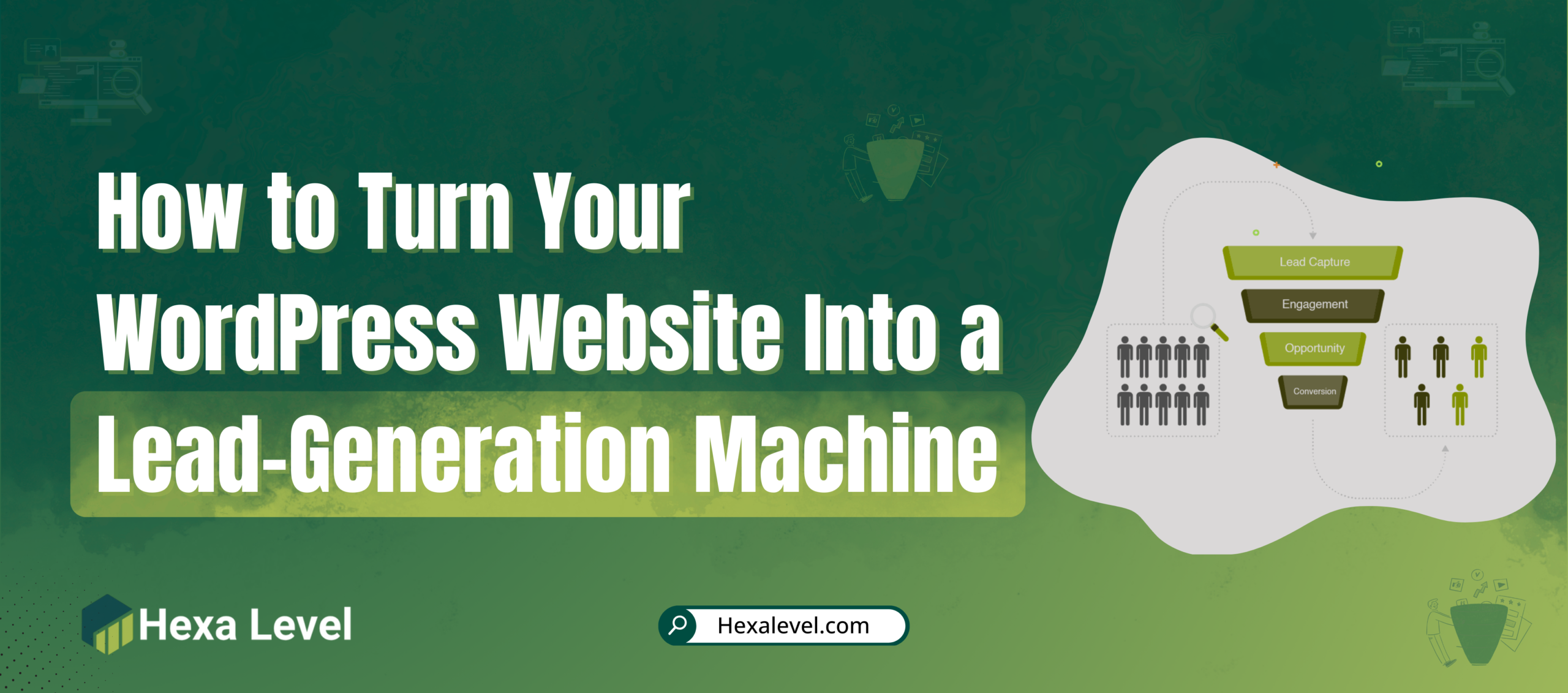
A WordPress sales funnel is a strategic journey that moves visitors through clear stages:
Awareness – They discover your website
Interest – They consume helpful or relevant content
Consideration – They see value in your offer
Action – They submit a form, book a call, or sign up
Instead of sending traffic everywhere, you send it somewhere specific.
Why You Need a Sales Funnel for WordPress
Here’s what happens when you add a funnel to your site:
Conversion rates increase by up to 300% when funnels are optimized (HubSpot)
Visitors spend more time on your site
Leads are pre-qualified before you speak to them
Follow-ups become automated and consistent
In short, your website starts working for you even while you sleep.
Step 1 Understand Your Ideal Visitor
Before building anything, get clear on one thing:
Who is your website really for?
Ask yourself:
What problem are they trying to solve?
What objections do they have?
What result are they looking for right now?
Practical Tip
Create one main funnel per audience type. Trying to serve everyone with one funnel usually converts no one.
Step 2 Create a High-Converting Landing Page
Your landing page is the engine of your funnel.
Unlike a homepage, a landing page has:
One goal
One CTA
Zero distractions
Must-Have Elements
✅ Clear headline addressing a pain point
✅ Short, benefit-driven subheadline
✅ Visuals or icons that reinforce trust
✅ A single call-to-action
✅ Social proof if available
Example:
Instead of “Contact Us,” use
👉 “Get My Free Website Audit”
Step 3 Offer a Lead Magnet That Actually Converts
People don’t give away their email “just because.”
You need an irresistible value exchange.
High-Converting Lead Magnet Ideas
Free checklist or guide
Industry-specific PDF
Calculator or quiz
Free consultation or audit
Email mini-course
According to OptinMonster, lead magnets can increase conversions by 20–50% when aligned with user intent.
Let’s Build Something Powerful Together
Step 4 Build Smart Forms and Opt-Ins
Your forms should be simple but intentional.
Best Practices
Ask for only essential information
Use multi-step forms for higher completion rates
Clearly state what happens after submission
Pro tip:
Multi-step forms often convert 30–40% higher than single-step forms.
Step 5 Connect Automation and Follow-Ups
Capturing leads is only half the job.
Following up quickly is where conversions happen.
What to Automate
📩 Welcome emails
📲 SMS confirmations
📅 Calendar booking links
📊 Lead tagging and segmentation
Studies show that responding to a lead within 5 minutes increases conversion chances by 9x.
Step 6 Guide Visitors With Clear CTAs
Your CTAs should feel helpful not pushy.
Replace generic CTAs like:
Submit
Learn More
With action-driven ones:
“Get My Free Guide”
“See If I Qualify”
“Book My Free Call”
Each page should have one primary CTA aligned with the funnel stage.
Step 7 Use Content to Fuel Your Funnel
Blog posts, pages, and resources shouldn’t exist in isolation.
Every piece of content should point toward your funnel.
Example Funnel Content Flow
Blog post → Content upgrade → Email nurture → Consultation booking
This is where a sales funnel for wordpress shines your content becomes a silent salesperson.
Let’s Build Something Powerful Together
Step 8 Optimize for SEO and Conversions Together
SEO brings traffic. Funnels convert it.
On-Page Optimization Tips
Use clear headings (H2s and H3s)
Optimize page speed
Make pages mobile-friendly
Add internal links to key funnel pages
🔗 Internal link idea:
Link blog posts to your lead magnet landing page.
🔗 External reference:
Google confirms page experience and clarity impact rankings (source: Google Search Central).
Step 9 Track Performance and Improve
You can’t improve what you don’t measure.
Track:
Page conversion rates
Form completion rates
Email open and click rates
Call bookings
Even small tweaks like changing a headline can boost conversions by 10–25%.
Let’s Build Something Powerful Together
Common Mistakes That Kill WordPress Conversions
Too many CTAs on one page
Long, complicated forms
No follow-up automation
Generic messaging
Treating WordPress like a static website
Remember: your website isn’t a brochure it’s a conversion engine
Frequently Asked Questions
What is a WordPress sales funnel?
Do I need coding skills to build a funnel?
How long does it take to see results?
Can I use one funnel for multiple services?
What’s the best lead magnet for WordPress sites?
How many steps should a funnel have?
Does SEO still matter if I have a funnel?
Are funnels only for selling products?
Conclusion
A beautiful WordPress website is nice.
A WordPress website with a funnel is profitable.
When you intentionally guide visitors, offer real value, and automate follow-ups, your site stops relying on luck and starts delivering predictable results.
- Start small.
- Build one funnel.
- Optimize it.
- Then scale.
👉 Next step:
Audit your site today and ask yourself where do visitors go next?
If the answer isn’t clear, now you know exactly what to fix.